

Most people searching for their first guitar ask the wrong question. They ask "which guitar looks coolest" instead of "which guitar actually fits how I want to play."

 The gap between an acoustic guitar and a classical guitar is bigger than most beginners realize, and picking the wrong one leads to frustration, sore fingers, and instruments gathering dust in the corner. If you are buying a guitar in Sweden and feel unsure where to start, this guide gives you a direct, no-fluff answer based on how these instruments actually behave in practice.
Table of Contents
Quick Takeaways
|
Key Insight |
Explanation |
|---|---|
|
String material is the defining difference |
Classical guitars use nylon strings. Acoustic guitars use steel strings. This single factor changes tone, finger feel, and playability entirely. |
|
Steel strings are harder on beginner fingers |
New players on acoustic guitars experience more initial finger soreness. Nylon strings on classical guitars are gentler, but this advantage fades within a few weeks of practice. |
|
Body shape affects sound projection |
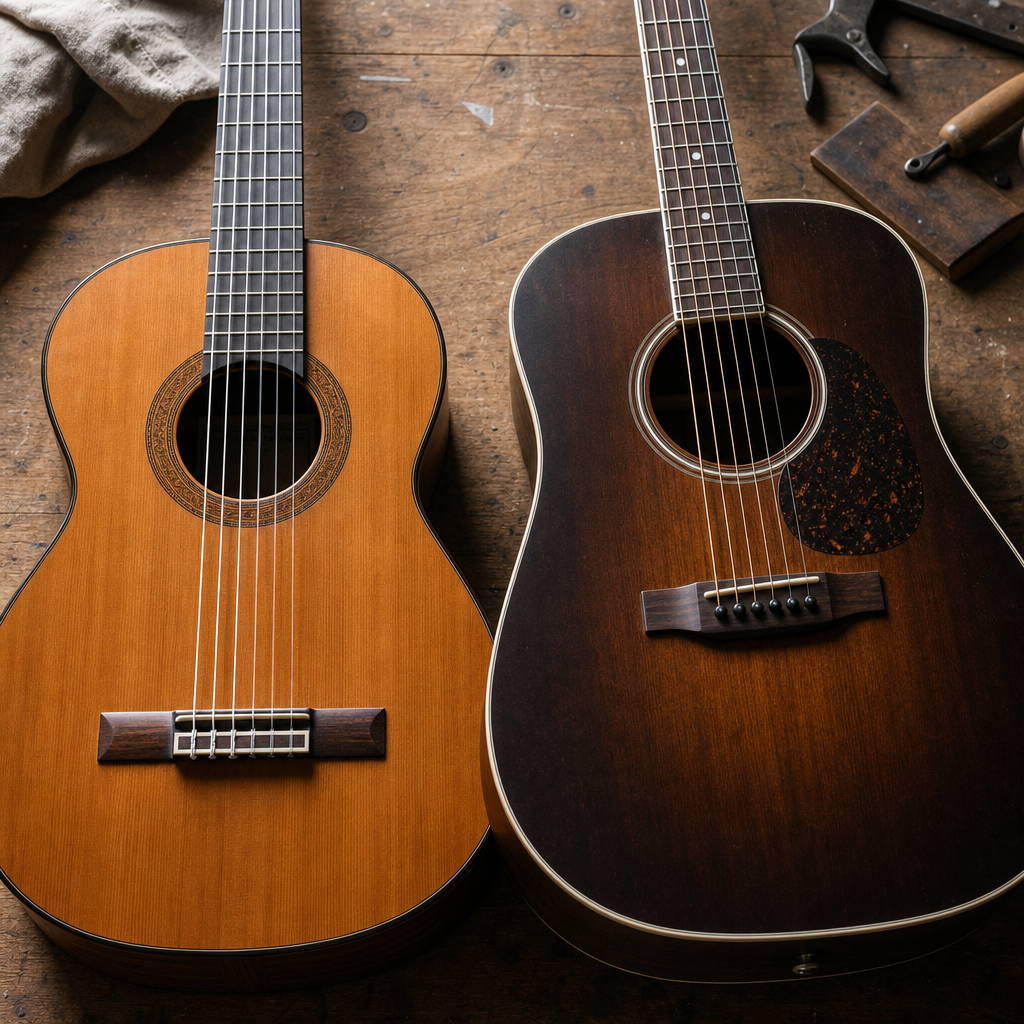
Acoustic guitars have a larger, dreadnought-style body that projects louder and suits strumming. Classical guitars have a smaller, narrower body tuned for fingerpicking precision. |
|
Genre dictates the right choice more than skill level |
If you want to play pop, folk, or country, choose acoustic. If you want to play classical repertoire, flamenco, or Latin styles, choose classical. Trying to do both on one guitar creates compromises. |
|
Classical guitars have wider necks |
The wider fretboard on a classical guitar is designed for fingerstyle technique. Players with smaller hands often find it harder to chord, not easier, despite the softer strings. |
|
Acoustic guitars pair better with accessories |
Steel-string acoustics accept clip-on tuners, soundhole pickups, and standard straps more naturally. Classical guitar hardware compatibility requires more planning. |
|
Price points overlap significantly |
At the beginner and mid-range level, both types cost similarly. Spend your budget on build quality and playability, not on the type label. |
What Actually Makes These Two Guitars Different
The confusion between acoustic and classical guitars is understandable because both are hollow-bodied, unamplified instruments you play with your fingers or a pick. But they are built to completely different engineering specifications, and those differences show up every single time you play.
The most important structural difference is the bracing. Acoustic steel-string guitars use heavier internal bracing, typically X-bracing, to handle the much higher tension of steel strings. Classical guitars use fan bracing, a lighter internal structure designed specifically for the lower tension of nylon strings. You cannot safely string a classical guitar with steel strings because the top will eventually collapse under the pressure. This is not a myth or an exaggeration, it is a structural reality.
Neck Width and Playing Posture
Classical guitars have a nut width of approximately 52mm, compared to around 43mm on a standard acoustic. That extra width exists to give trained fingerstyle players room to pluck individual strings cleanly without touching adjacent ones. The tradeoff is that open chord shapes like G major or C major require more hand span on a classical neck, which catches many beginners off guard.
Classical guitar technique also traditionally involves resting the instrument on your left leg and holding it upright with a more formal posture. Acoustic guitars are more forgiving of casual seated or standing playing styles, which matters when you are just starting out and trying to build practice habits.
Tone Character
Nylon strings produce a warm, round, slightly muted tone with a slower attack. Steel strings produce a brighter, more cutting sound with a sharper transient attack. Neither is objectively better. They serve different musical purposes. A classical guitar played through a recording sounds unmistakably like one. So does an acoustic steel-string. If you have a specific sound in your head, that sound tells you which guitar to buy.

Acoustic Guitar: What It Does Well and Who It Suits
Steel-string acoustic guitars dominate the global market for good reason. They are the most versatile instrument in the guitar family for popular music styles. If your musical reference points include artists like Ed Sheeran, Taylor Swift, John Mayer, or any traditional Swedish folk musician, you are thinking about an acoustic guitar, not a classical one.
Strumming and Chord-Based Playing
Acoustic guitars are optimized for strumming. The steel strings respond well to pick strokes and produce the full, ringing chord sound that defines campfire songs, singer-songwriter tracks, and pop arrangements. The dreadnought body shape, which is the standard large-body acoustic shape, amplifies low-end frequencies and projects volume across a room without any electronics.
In practice, players who want to strum open chords and sing along will find an acoustic guitar feels natural within days. The muscle memory for simple chord progressions builds quickly, and the payoff in recognizable sound comes fast, which matters enormously for beginner motivation.
Acoustic Guitar and Accessories Compatibility
One practical advantage that does not get discussed enough is accessory compatibility. Steel-string acoustics work seamlessly with clip-on tuners, soundhole pickups for amplification, standard guitar straps attached to strap buttons, and a massive range of string gauges from light to heavy. At theTool, the accessories range for acoustic guitar is extensive precisely because demand is high and the ecosystem around these instruments is mature.
Pro tip: If you buy an acoustic guitar and plan to play live at any point, invest in a soundhole pickup or a built-in preamp model from the start. Retrofitting an acoustic with electronics later is possible but more expensive than buying an electro-acoustic version upfront.
Best Music Genres for Acoustic Guitar
Acoustic guitars excel at folk, pop, country, bluegrass, rock rhythm parts, blues, and Scandinavian folk traditions. They also work well for fingerpicking styles like Travis picking, though they are less ideal for the precise classical repertoire that classical guitars were built for.
Classical Guitar: What It Does Well and Who It Suits
Classical guitars are purpose-built instruments. They are not a softer or easier version of the acoustic guitar. They are a specialized tool for a specific musical tradition, and within that tradition they are extraordinary.
Fingerstyle Precision and Technique Development
The wide neck, nylon strings, and fan bracing of a classical guitar are all engineered to support formal fingerstyle technique. The right-hand technique taught in classical guitar method involves using the fingernails as part of the tone production system. The strings respond to subtle variations in right-hand angle and pressure in ways that steel strings simply do not. For players learning classical repertoire, flamenco, or bossa nova, this responsiveness is not optional, it is essential to the sound.
Music schools and conservatories across Sweden and internationally use classical guitars as the standard teaching instrument for formal guitar study. If you or your child is entering a structured music education program, confirm with the teacher or school which type of guitar is required before purchasing. Many programs specify classical guitars explicitly.
Gentler on Fingers, But Not Easier Overall
Nylon strings require less finger pressure to fret cleanly, which is why classical guitars are sometimes recommended for young children. But the wider neck offsets this advantage significantly for players with average or smaller hand spans. A common mistake is assuming classical equals easy. The technique required to play classical guitar correctly is arguably more demanding than acoustic strumming technique, not less.
Pro tip: If you are buying a classical guitar for a child under ten, prioritize getting the right scale length for their body size. A 3/4 size classical guitar is almost always a better fit than a full-size model for young beginners, regardless of how advanced they feel.
Side-by-Side Comparison: Acoustic vs Classical Guitar
The table below covers the specifications and use cases that actually matter when choosing between these two instruments. Use this as a direct decision reference.
|
Feature |
Acoustic Guitar (Steel-String) |
Classical Guitar (Nylon-String) |
|---|---|---|
|
String Material |
Steel |
Nylon |
|
Nut Width |
Approximately 43mm |
Approximately 52mm |
|
Body Bracing |
X-bracing (heavy) |
Fan bracing (light) |
|
Tone Character |
Bright, cutting, high projection |
Warm, round, lower projection |
|
Playing Style Fit |
Strumming, fingerpicking, pop, folk, country |
Fingerstyle, classical repertoire, flamenco, bossa nova |
|
Beginner Finger Soreness |
Higher initially |
Lower initially |
|
Chord Accessibility |
Easier for open chord shapes |
Harder due to wider neck |
|
Accessories Ecosystem |
Large and widely available |
Smaller, more specialized |
|
Suitable for Amplification |
Yes, with soundhole pickup or built-in preamp |
Yes, but less common and more specialized |
|
Formal Music Education Use |
Moderate |
High, standard in conservatories |
"The guitar is the easiest instrument to play badly and the hardest to play well." - Andres Segovia, widely regarded as the father of modern classical guitar technique. His words apply equally to acoustic and classical instruments, the barrier to entry is low, but mastery demands real commitment regardless of which type you choose.
Guitar for Beginners: Honest Advice on Where to Start
If you are searching for a guitar for beginners and feel stuck between these two options, here is the direct answer: buy the type that matches the music you actually want to play. Do not choose based on which one seems easier, because the ease advantage of nylon strings disappears within three to four weeks of regular practice as your fingertips toughen up.
The Genre Test
Think about five songs you want to be able to play within the next year. Look them up. If those songs are by artists who play steel-string acoustic guitars, buy an acoustic. If those songs are classical pieces, flamenco compositions, or bossa nova standards, buy a classical guitar. This single exercise eliminates 90% of the confusion beginners experience.
What to Budget as a Beginner
At the entry level, a playable acoustic or classical guitar in Sweden costs roughly 1,000 to 2,500 SEK. Below that price point, intonation and action quality become inconsistent enough to actively slow down your learning. Above that range, you are paying for tone quality and build refinement that you will not fully appreciate until you have been playing for at least a year.
The instruments in theTool's beginner guitar range are specifically selected to hit the playability threshold at accessible prices, which matters more for learning speed than most accessories you might add to the budget.
Common Beginner Mistakes When Choosing
A common mistake is buying a guitar based on brand name recognition without checking whether the action, the string height above the fretboard, is set up properly. High action makes every guitar harder to play and is the number one reason beginners quit. Always ask whether a guitar has been set up before purchase, or budget a small amount for a professional setup after buying.
Another mistake is over-buying. A 5,000 SEK guitar does not teach your fingers to move faster than a 1,500 SEK guitar. Spend the difference on lessons or accessories like a reliable tuner and a sturdy gig bag.
Buying a Guitar in Sweden: What to Look For
The Swedish guitar market has grown noticeably over the past decade, with more options available online and through specialist retailers than ever before. When buying a guitar in Sweden, whether acoustic or classical, the same evaluation criteria apply regardless of where you purchase.
Setup Quality Over Brand Prestige
Swedish weather conditions, particularly the combination of cold winters and centrally heated indoor air, create very low humidity environments that can warp guitar necks and crack tops over time. A guitar with a properly adjusted truss rod and well-humidified wood is a better investment than a prestigious brand name that arrives poorly set up. Ask your retailer directly about setup and humidity treatment before purchasing.
What theTool Offers Swedish Buyers
theTool stocks both acoustic and classical models built to meet the needs of Swedish players at multiple price points. The product range spans entry-level instruments for absolute beginners up through mid-range options for advancing players, all selected with the cold-climate storage and playability requirements of Swedish households in mind. The accessories range, including strings, gig bags, tuners, and straps, is available alongside instruments so you can build a complete setup from a single trusted source rather than piecing things together from multiple suppliers.
Pro tip: When storing your guitar in Sweden during winter, keep it in a room where the temperature stays above 15 degrees Celsius and use a guitar humidifier inside the case. The difference in wood stability over a single winter season is significant.
Frequently Asked Questions
Can I use a pick on a classical guitar?
Technically yes, but it is not designed for pick use. Classical guitar technique uses the fingernails and fingertips of the right hand to produce tone. Using a pick on nylon strings produces a thin, clicky sound that does not represent the instrument well. If you want to use a pick regularly, buy an acoustic steel-string guitar instead.
Is a classical guitar easier for children to learn on?
It depends on the child's hand size and the teacher's method. Classical guitars have softer nylon strings that are gentler on small fingers, but the wider neck makes chord shapes harder to form for small hands. A 3/4 size acoustic guitar is often a better fit for children ages 6 to 9 because the narrower neck compensates for smaller hand span. Discuss this specifically with your child's guitar teacher before purchasing.
What is the actual sound difference between acoustic and classical guitar?
Acoustic steel-string guitars produce a bright, resonant, sustaining sound with clear high-end definition. Classical guitars produce a warmer, rounder tone with faster note decay. Both can be beautiful, but they are suited to different musical contexts. If you record both instruments and play them back, you will immediately hear why replacing one with the other in a recording does not work.
Can I learn classical guitar techniques on an acoustic guitar?
Some fingerstyle techniques transfer between the two instruments, but classical repertoire is specifically notated and voiced for classical guitar tone and technique. Trying to play Segovia arrangements on a steel-string acoustic will produce a technically passable but tonally incorrect result. If classical repertoire is your goal, buy a classical guitar from the start and avoid relearning later.
How do I know if a beginner guitar is properly set up before buying it?
Press down on the string at the first fret and then at the 12th fret of any string. The gap between the string and the 7th fret should be small, roughly the thickness of a credit card for acoustic guitars. If the string sits high above the fret, the action is too high and the guitar will be unnecessarily hard to play. A good retailer will either have this adjusted or tell you honestly that it needs a setup.
Which guitar holds its value better in Sweden?
Mid-range and high-end acoustic guitars from established manufacturers tend to retain resale value better than entry-level classical guitars. This is partly because the second-hand acoustic market in Sweden is larger and more active. If resale value matters to you, buy the best acoustic guitar you can afford at mid-range rather than the cheapest classical option available.
If you have recently bought either an acoustic or classical guitar, or if you are currently trying to decide between them, share your experience or your question in the comments below so others making the same decision can benefit from what you have learned.
References
-
Statista: Global musical instruments market data and consumer trends
-
Forbes: Business and consumer insights relevant to the music instrument industry